
Shanghai
A major shipbuilding region, including Hudong-Zhonghua’s LNG carrier construction.
China State Shipbuilding Corporation ↗Behind every record-breaking vessel is a place capable of building it.
UNCTAD reports that these three economies accounted for 91% of completed ship tonnage in 2025, measured by gross tonnage. This measures output, not the number of ships. UNCTAD Data Hub ↗
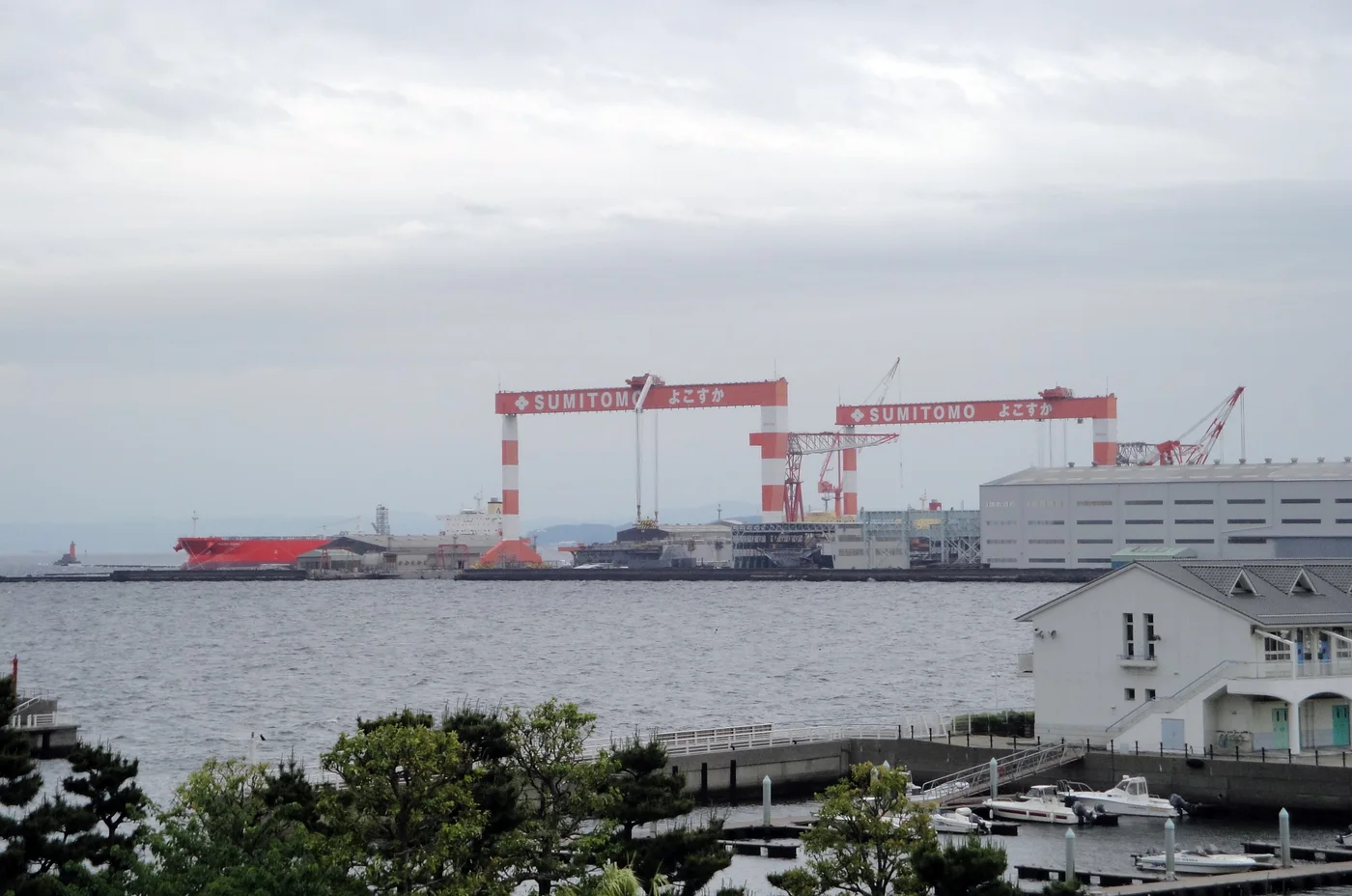
Sumitomo’s Yokosuka shipyard in May 2011. This later photograph shows the yard, not Seawise Giant under construction.
村上 敦 / Wikimedia Commons · CC BY-SA 2.1 Japan. Brightness previously adjusted on Commons by トトト. Resized and converted to WebP; responsive crop.
Seawise Giant was built at Sumitomo’s Oppama yard in Yokosuka, Japan. Sumitomo describes Oppama as a new yard established for larger merchant ships on Tokyo Bay, later known as Yokosuka Shipyard. Sumitomo’s history ↗ · Vessel sources ↗
Location matters: a large hull needs suitable building docks, waterfront access and a supply chain able to deliver machinery and major steel structures.
Why build a ship this large? →A starting point for the atlas, not an exhaustive list of yards.
Historic and shipyard pins indicate approximate areas, not exact berths or navigable routes. Current-vessel pins, when available, show timestamped AIS reports. A missing report does not establish a vessel’s location.
A major shipbuilding region, including Hudong-Zhonghua’s LNG carrier construction.
China State Shipbuilding Corporation ↗Home to HD Hyundai Heavy Industries’ major shipbuilding complex.
HD Hyundai Heavy Industries ↗The historic Sumitomo yard where Seawise Giant was built.
Sumitomo Heavy Industries ↗Reviewed 8 September 2026. Industry figures describe 2025 output. Country of construction is different from flag state or owner nationality.