
Alang
Seawise Giant was dismantled here in 2010.
Guinness World Records ↗A ship’s working life ends. Its steel, equipment and story take different paths.
India, Bangladesh and Türkiye accounted for 80% of recycled ship tonnage in 2025, according to UNCTAD. The shares change over time, and are measured by gross tonnage. UNCTAD Data Hub ↗
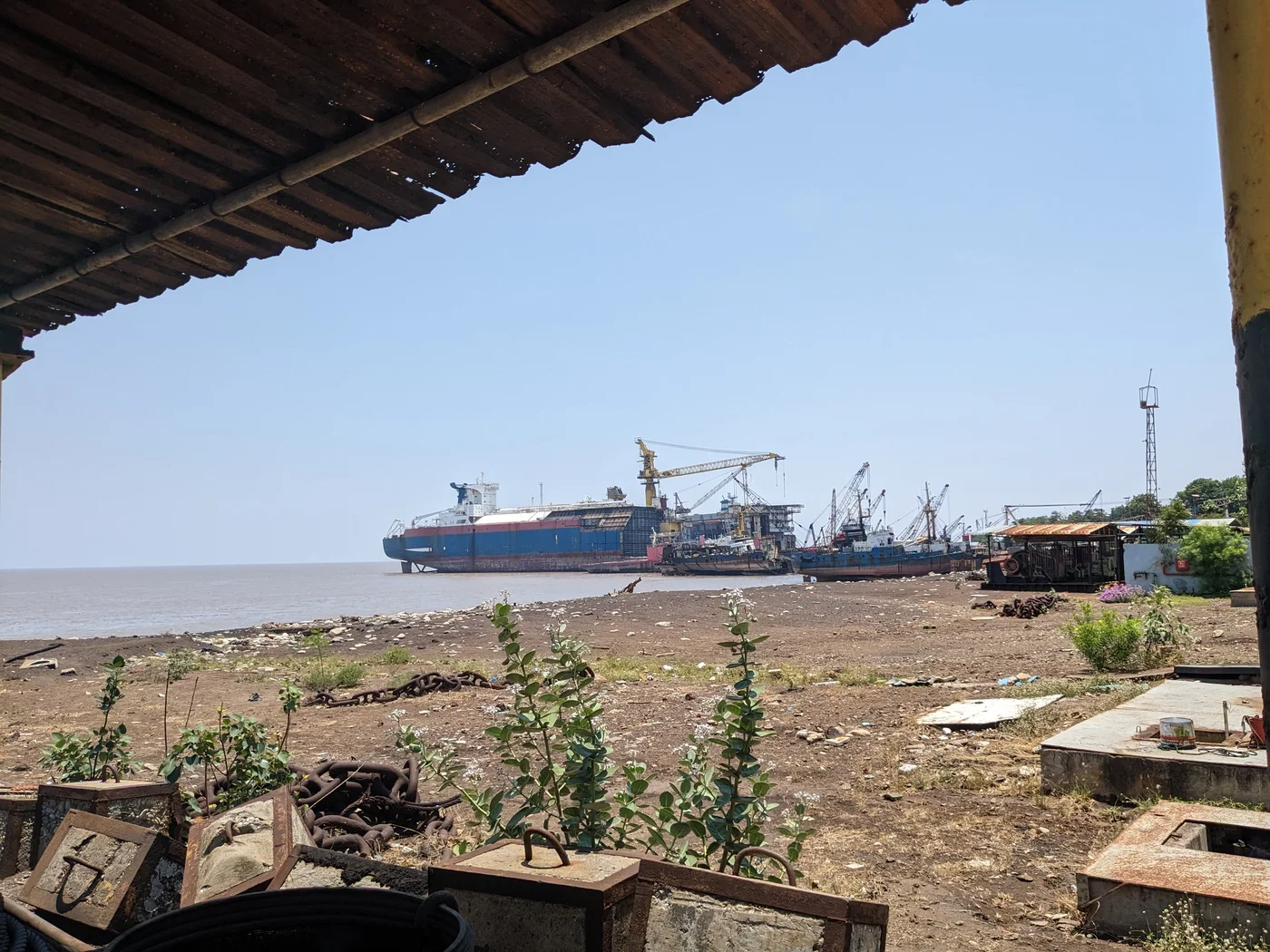
Ship recycling at Alang in May 2023. The vessels pictured are not Seawise Giant.
Neilsatyam / Wikimedia Commons · CC BY-SA 4.0. Resized and converted to WebP; responsive crop.
Under the name Mont, Seawise Giant made its final voyage to India. It was dismantled at Alang in 2010, becoming the largest ship ever scrapped according to Guinness. Guinness World Records ↗
The vessel is gone, but its anchor survives in Hong Kong’s Maritime Museum Anchor Plaza. The museum’s account ↗
Read the ship’s complete profile →Explore Alang, Chattogram and Gadani. These examples are not a current ranking of recycling yards.
Historic and shipyard pins indicate approximate areas, not exact berths or navigable routes. Current-vessel pins, when available, show timestamped AIS reports. A missing report does not establish a vessel’s location.
Seawise Giant was dismantled here in 2010.
Guinness World Records ↗A major ship-recycling coast north of the city.
International Maritime Organization ↗A ship-recycling center on Pakistan’s coast.
International Maritime Organization ↗Dismantling also means handling fuels, equipment and potentially hazardous materials, with consequences for workers and the surrounding coast. The IMO’s Hong Kong Convention addresses safe and environmentally sound ship recycling. IMO: ship recycling ↗
A map pin identifies an industrial area. It is not a certification of the practices at every facility there.
Reviewed 8 September 2026. Industry figures describe 2025 recycling. Photography shows Alang in 2023 and does not depict Seawise Giant.